Rose's Favorite Sourdough Tools
Many class attendees have asked, "Where did Rose get that?" These are the tools we use and recommend but do not currently stock in our shop. As an Amazon Associate, Loving the Loaf earns from qualifying purchases at no extra cost to you.
Thermometer / Humidity Gauge
Temperature plays an important role during stretch and folds and bulk fermentation. I strongly recommend keeping one of these gauges near your dough so you always know how warm its environment is. I place one in the microwave when using the warm-cup-of-water method or set it directly on the bowl cover during bulk fermentation.
Baking Gloves
I cannot say enough good things about these baking gloves. I’ve used the same pair for over five years, and if you’ve attended one of my classes, you’ve seen me use them. They provide excellent dexterity and protection when handling baking vessels heated to 500°F, and I wouldn’t be without them in my kitchen.
I’m affiliated with LANON and earn a small commission when you use my purchase code, at no additional cost to you. You’ll also receive 15% off when this code is applied at checkout. ROSE154
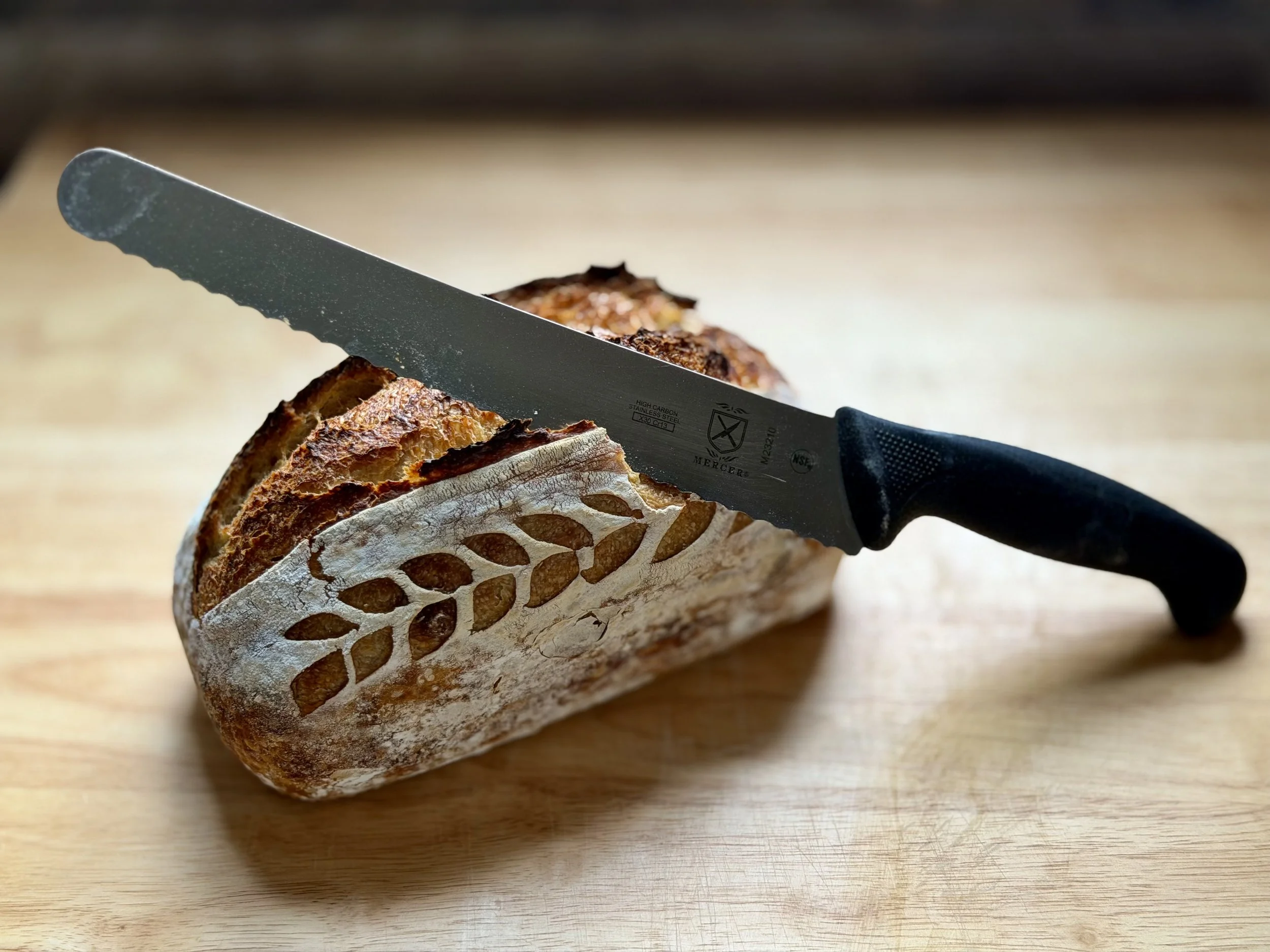
Bread Knife
I’m constantly asked in class, “Where did you get that knife?” Now you know! I’ve tried both inexpensive and high-end bread knives, and this one is hands down my favorite. I’ve sliced over a thousand loaves with it, never sharpened it, and it still cuts beautifully. I can’t recommend it highly enough.
Watch the video to see how easily it slices through a crisp sourdough crust.
8-Cup Glass Mixing Bowl
This is the bowl I use in class and almost every day in my kitchen. It’s durable, perfectly sized for making one loaf at a time, and the clear glass makes it easy to monitor your dough as it rises. It’s a versatile kitchen staple—and especially useful for mixing sourdough.
2-Cup Glass Measuring Cup
Students often ask where I found this measuring cup. It’s lightweight and durable, with markings for three different units of measurement. The well-designed spout pours cleanly, and the insulated handle stays comfortable even when the cup is hot.
WECK Mini Jelly Jar for Salt
This little jar makes it easy to pour salt slowly and consistently while measuring ingredients on your kitchen scale. It’s simple, practical, and something I use all the time.
WECK Canning Jar for Starter
This jar is perfect for your starter. You will come to appreciate its wide-mouth, tapered design and quality over time—it makes feeding your starter a joy. This is what I use in my kitchen. If you have purchased a jar cover from us, it will fit this jar beautifully.
Flour Bin
If you’ve attended one of my classes, you’ve seen this flour bin on my teaching cart—and I’m asked about it all the time. I’ve used mine for about seven years. It’s easy to use, keeps flour dry, and holds just the right amount. I’m keeping it!
Wooden Flour Scoop
I love using natural materials in my kitchen. At six inches long, this wooden scoop is large enough to make measuring easy while still fitting neatly inside my flour bin.
Half-Loaf Bannetons
These bannetons are perfectly sized for dividing one recipe into two smaller loaves—an especially useful option for smaller households. Enjoy one loaf while it’s fresh and freeze the other for another day.
Cast-Iron Dutch Oven — Budget-Friendly
If you’re looking for a more budget-friendly option, this Lodge cast-iron Dutch oven is a solid choice. I’ve baked many loaves in mine and achieved the same baking results as with my Le Creuset. The primary difference is in the materials, finish, and long-term durability.
I may eventually replace the Lodge, while I expect my Le Creuset to be passed down to my children. I’ve included this option among my favorites because everyone should have access to the benefits of baking bread in cast iron.
Cast-Iron Dutch Oven
There’s no substitute for cast iron, and a Dutch oven is useful for so much more than baking bread. I’ve used this one for over ten years and baked well over a thousand loaves in it. If you’re looking for what I consider the best, this 5.5-quart Dutch oven from Le Creuset will not disappoint.
Cast-Iron Bread Cloche
This cast-iron cloche from Le Creuset makes scoring your loaf quick and easy because you don’t have to remove it from the vessel. The raised rings on the base allow air to circulate beneath the loaf, helping produce a beautifully baked bottom crust.
If you’ve attended one of my classes, this is the cloche you saw me use. Its bread-specific design makes it less versatile than a Dutch oven, but if you’re looking for a dedicated bread baker of exceptional quality, this one is built to last a lifetime.
Dutch Oven Trivet
If you use a cast-iron Dutch oven and want to replicate the raised rings found on the cloche listed above, this trivet is the answer. Place it inside your Dutch oven, then set your baking mat or sling—and loaf—on top. The trivet allows air to circulate beneath the loaf, giving you greater control over the bottom crust.
Roaster Pan
Cast-iron Dutch ovens are heavy, so if you’re looking for a lighter option, a standard roaster pan can work well. While it doesn’t offer all the benefits of cast iron, with a little practice, you can still bake beautiful loaves—and no one will know the difference.
Bread Pan Set
This set is a great alternative to a Dutch oven when you want to maximize oven space and bake more loaves at once. With eight pans, you can bake four sandwich-style loaves at a time, using one pan for the loaf and another turned upside down as a cover.
I’ve used these pans extensively in my own kitchen and confidently recommend them.
Scoring Scissors
If you’d like to take your scoring to the next level, these scissors are a wonderful complement to your lamé. I use them for short, deep, and intricate cuts—and I smile every time I pull a beautifully scored loaf from the oven. They’re exceptionally sharp, which is essential for clean, precise scoring.
Thai Rice Flour
If you’d like to take your scoring designs to the next level, Thai rice flour makes a noticeable difference. I use it regularly to create a beautiful contrast that helps each design stand out.
In the photo, the loaf on the left was dusted with Thai rice flour, while the loaf on the right was dusted with bread flour.
Wheat Mill Attachment for Mixer
In my classes, I teach about the nutritional benefits of freshly milled wheat for feeding your starter. This attachment for a KitchenAid mixer is a great way to get started, especially since dedicated grain mills can be expensive or difficult to find.
I’ve used this mill myself, and so have many of my students. It’s a solid, practical option that gets the job done.
Want to see these mills in action?
Hand-Crank Wheat Mill
Don’t have a KitchenAid mixer? This hand-crank mill is an excellent alternative for milling wheat to feed your starter. It offers good milling quality, simple operation, and excellent value—making freshly milled wheat accessible without investing in an electric grain mill. I’ve used this mill myself and have been genuinely impressed with it.
Wheat Berries
If you’d like to mill your own flour and feed your starter the way I teach in class, these are the wheat berries I recommend. What you feed your starter plays an important role in keeping it healthy and active—and in the quality of the bread it produces.
Bread Bag
Many of you enjoy giving your sourdough as a gift and have asked which bags I recommend. These are the same bags I used at farmers markets, and they work beautifully for packaging and sharing your loaves.
Apron
Several people have asked where I found the apron I wear in class. This is it—and I love it!
Shop Our Store
Looking for sourdough supplies? Our shop carries many practical tools and handmade favorites designed to support the simple method you learned in our class—including bannetons, bread bags, bowl and jar covers, dough slings, and more.